
Engineered Heavy-Duty Wash Down Solutions
Setting up a fixed industrial site, transport depot, or machinery workshop requires an infrastructure built to last. When it comes to equipment maintenance and fleet cleaning, relying on makeshift or temporary setups is a recipe for operational bottlenecks, frequent structural failures, and costly EPA fines. For businesses looking for a long-term, rugged, and completely compliant solution, investing in custom-engineered permanent wash bays is the gold standard.
At GPS Environmental, we design, manufacture, and supply heavy-duty permanent wash bays across Australia. Built from the ground up to handle everything from light commercial vehicles to 50-tonne earthmoving equipment, our fixed wash down facilities combine robust civil engineering with cutting-edge wastewater treatment technology.
What Are Permanent Wash Bays?
Permanent wash bays are fixed-site industrial cleaning facilities constructed with engineering-grade concrete slabs, integrated containment bunding, specialized drainage, and dedicated wastewater treatment systems. Unlike portable or temporary wash pads, a permanent facility is integrated directly into a site’s civil infrastructure, designed to withstand continuous heavy vehicle traffic, high-volume wash downs, and strict environmental compliance mandates over decades of use.
Permanent Wash Bays Designed for Your Site
GPS Environmental designs permanent wash bays to suit a wide range of commercial and industrial applications across Australia.
Our wash bay systems can be:
- Custom engineered for new developments
- Integrated into existing infrastructure
- Upgraded to meet revised compliance standards
- Scaled for light vehicles or heavy plant
Common applications include truck wash bays, workshop wash bays and unroofed wash pads exposed to rainfall.
With over 20 years of wash bay expertise across multiple industries, we understand the technical requirements involved in building compliant and durable wash down areas.
Each wash bay is designed with consideration for:
- Traffic load and vehicle type
- Solids accumulation
- Hydrocarbon contamination
- Rainfall exposure
- Discharge requirements
The result is a wash bay system that performs efficiently while maintaining compliance.
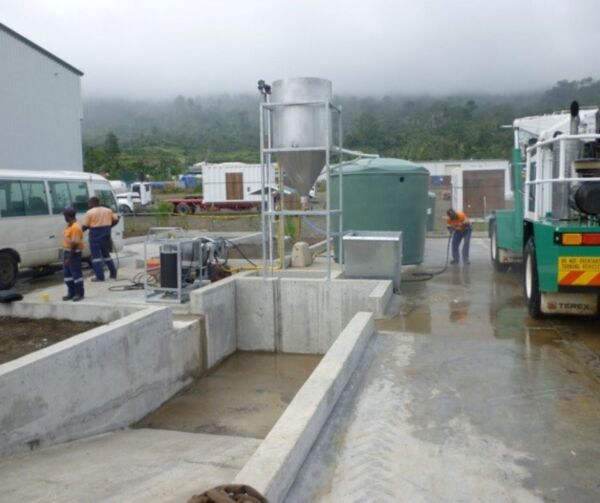
The Structural Core: Anatomy of a Heavy-Duty Wash Bay
The longevity of a fixed wash down facility depends entirely on the quality of its civil design. A poorly engineered slab will crack under the weight of heavy machinery, leading to wastewater leaking into the subsoil—a major environmental violation.
GPS Environmental’s permanent wash bays are designed to meet the highest structural and compliance standards:
1. Reinforced Concrete Slabs
The foundation of a permanent facility is a precision-poured, steel-reinforced concrete slab. The concrete mix, thickness, and internal mesh layout are custom-engineered based on your specific fleet profile. Whether you are washing delivery vans or heavy mining trucks, the slab is graded precisely to prevent water pooling, ensuring all runoff flows smoothly toward the central drainage system.
2. Perimeter Containment Bunding
To satisfy environmental regulations, all wash water must be entirely contained within the washing zone. Our designs incorporate heavy-duty concrete perimeter bunds. For vehicle entry and exit points, we utilize concrete rollover bunds or speed-hump style profiles, allowing heavy vehicles to pass over easily while preventing contaminated water from escaping onto the surrounding hardstand.
3. High-Containment Walls
To manage overspray from high-pressure water blasters and protect the rest of your site from drifting overspray, dirt, and degreaser mist, we integrate durable spray walls into the design. These can be custom-built to various heights depending on the size of the equipment you service, ensuring a clean, safe, and contained working environment.
4. Roofed vs. Unroofed Infrastructure
While an unroofed wash bay is sometimes necessary for exceptionally tall machinery or crane access, roofing a permanent facility is always the most efficient choice. A heavy-duty roof structure keeps clean rainwater out of your treatment system. If a wash bay is unroofed, a sudden downpour will flood the treatment pits, meaning you end up paying to treat or haul away thousands of liters of natural stormwater.